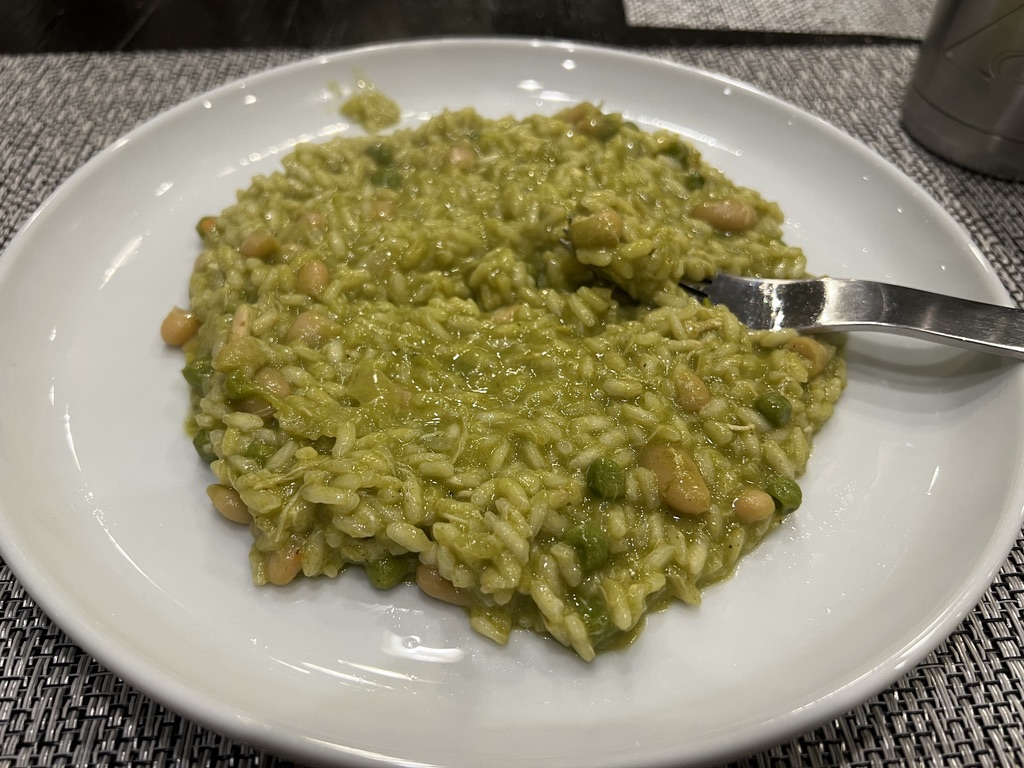
Risotto ai Cannellini e Pesto
The Risotto cogli Asparagi e Zafferano is our favorite, but this one is also really good and is our second favorite. All risotti are made more or less the same. The taste of this one also doesn’t seem to be affected much by the choice of broth, so vegetable broth is fine if you are vegetarian.
I am currently using canned cannellini beans, but would like to try other beans such as borlotti which we haved used in a minestra, and I’d like to start with dry beans and soak them.
1 chopped shallot or ½ medium chopped yellow onion
1/4 cup (55g) extra-virgin olive oil
10 cups (2500g) chicken broth or vegetable broth (homemade is strongly preferred, otherwise unsalted)
1 cup (237g/mL) dry white wine
2 ½ cups (450g) Carnaroli (or Vialone Nano or Arborio) rice
2 15oz cans (425g each, 850g total) of cannellini beans, then rinsed well and drained
4 oz (113g) fresh peas (optional)
170 g pesto di basilico (ideally homemade, already with cheese in it)
1/2 cup (50g) freshly grated Parmigiano-Reggiano cheese (less than normal because the pesto has cheese)
3 Tbsp (42g) butter, 6 Tbsp (84g) if you want it creamier
Salt, to taste
1. Start bringing broth to a simmer.
2. In a heavy pot that will be used for the full cooking, toast the rice over medium-high heat until they are a little translucent, stirring continually. You don't want them to get brown. The purpose of this step is to seal in the starches, give the rice a slightly richer and nuttier taste profile, and to help the rice cook more uniformly in the broth. Many Italian cooks insist on this step. I'm not convinced that it makes any noticeable difference, but I do it anyway because it's easy.
3. Add wine and cook over medium-high heat until most of the wine is cooked away, stirring as you go. I like to use a large flat-edged spatula to stir the rice because it can scrape the bottom of the pot better than a rounded wooden spoon can.
4. Add enough hot broth to just barely cover the risotto (see second photo below). Cook, stirring (nearly) constantly. Continue adding broth, one ladleful at a time. Keep the rice mostly submerged in broth the whole time, otherwise the risotto will come out too dry.
Note: The cooking time from this point to completion varies based on the rice used (the variety and its age), but you’re probably looking at 15 minutes more. The risotto is done when you’ve reached the desired creaminess and the individual grains are tender yet al dente.
5. About 5 minutes into the ladling/stirring process, add the beans and optional peas.
8. About 10 minutes into the ladling/stirring process, add the pesto. Around this time, start tasting for salt, especially if you used unsalted broth. With homemade broth, I normally do not need to add any salt. As you season, however, remember that the cheese will also add a little salty flavor. You can also add more pesto if you prefer.
9. When you think the risotto is almost done, stir in the cheese and butter, but no more broth, and lower the heat a little. Then let 30-40% of the remaining liquid evaporate.
10. Remove from heat, do NOT stir, and cover. Let sit for 5 minutes. It will absorb the remaining liquid and make the risotto moister.
11. Remove the cover and give it a good stir. Some people will add a ladleful of broth before putting the cover on. I don’t do that because I feel that there is already plenty of liquid since I had been cooking it submerged for the entire time.
12. If it isn’t salty enough for some, they can always add a little parmigiano at the table.
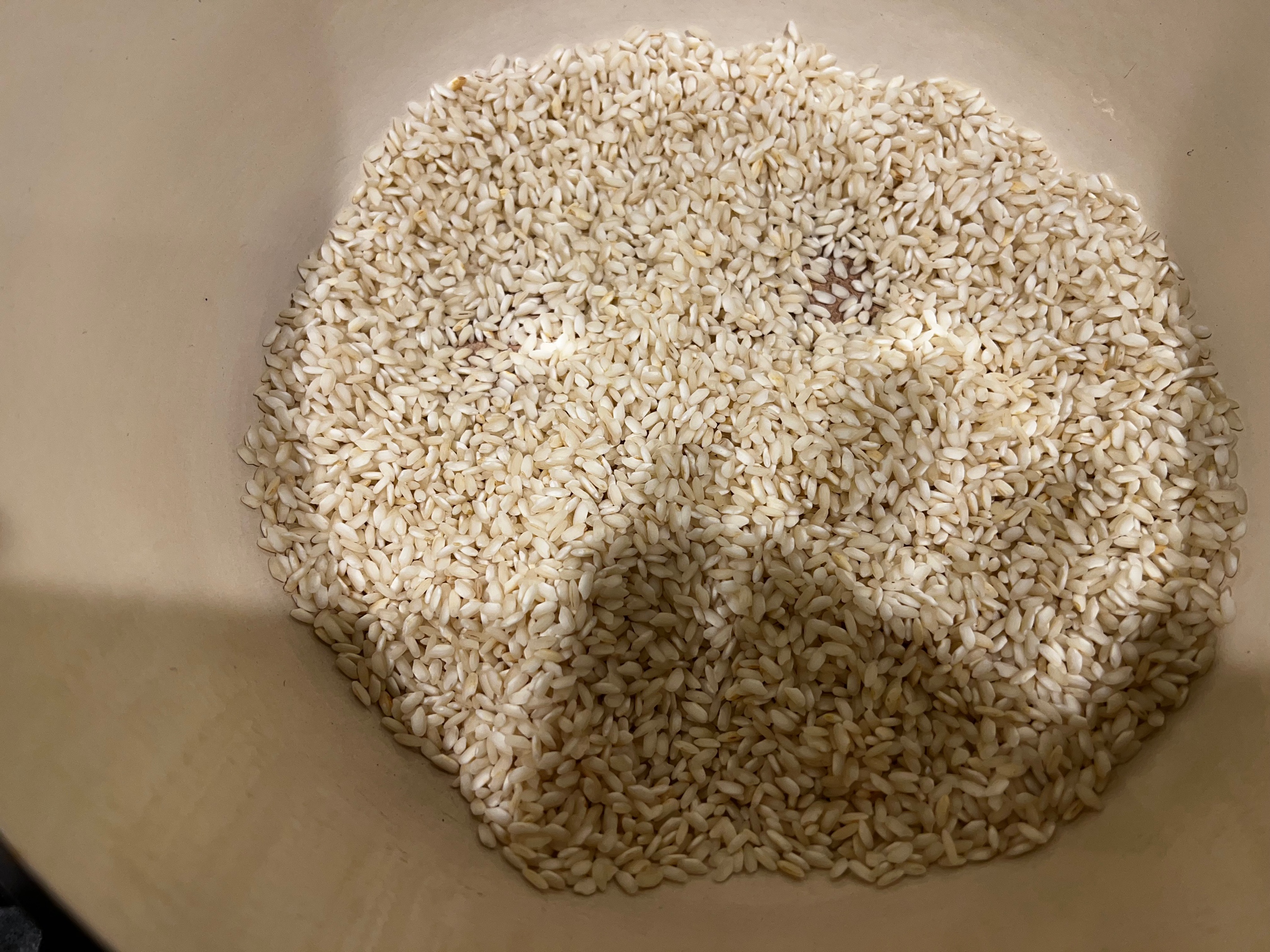
(rice after being toasted)
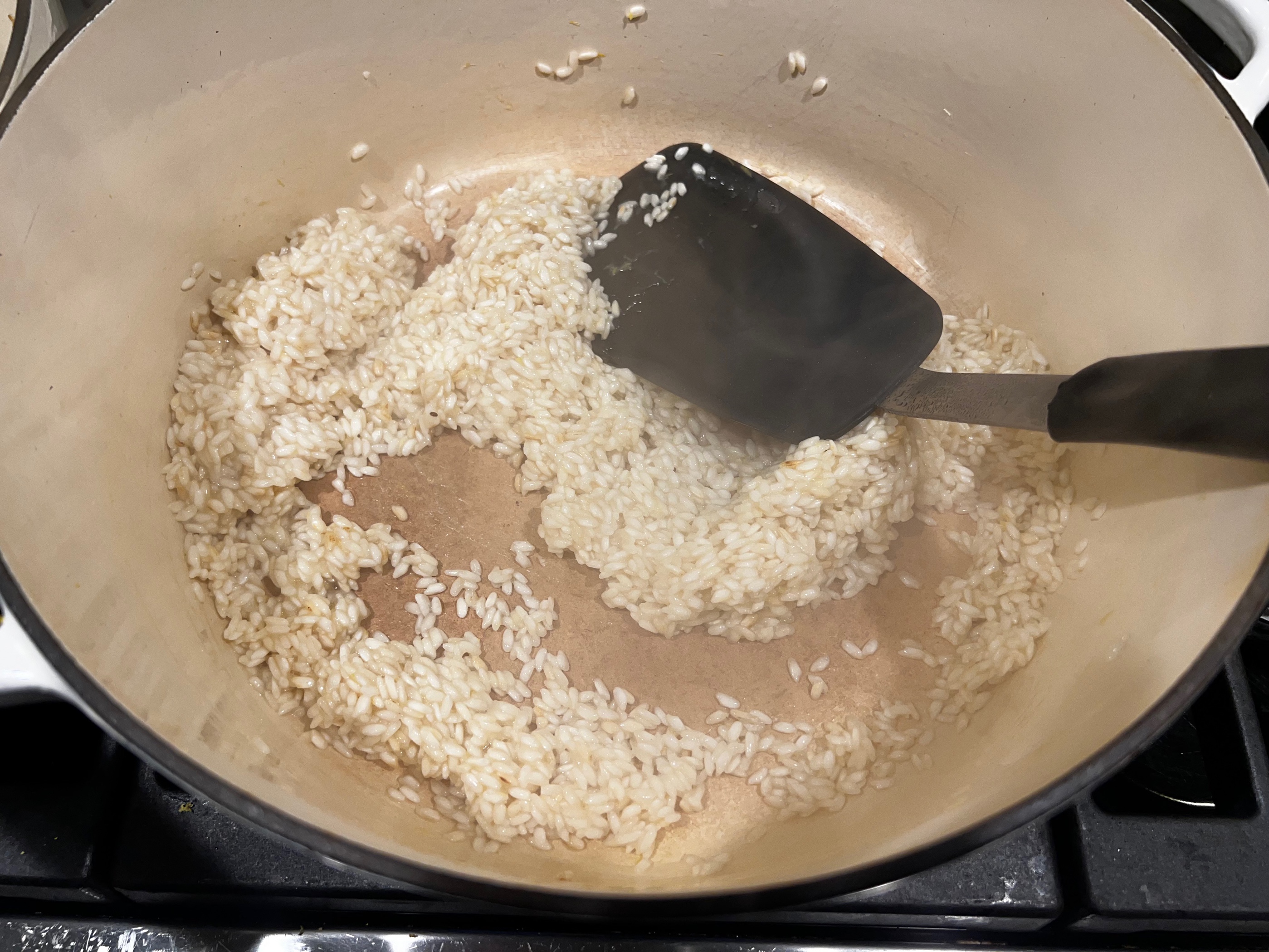
(after cooking down the rice in the white wine)